Pakistan-China Cultural Relations at 75: From Ironclad Friendship to People-to-People Bridges

By AINI Editorial Desk | May 27, 2026
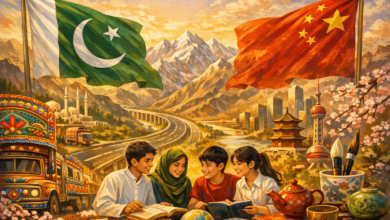
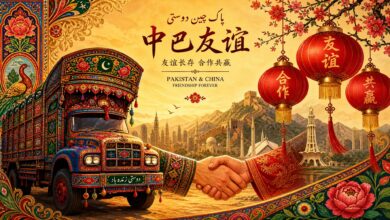
Pakistan and China are marking a major milestone in 2026: the 75th anniversary of diplomatic relations. While the phrase “ironclad friendship” is often used to describe the strategic partnership, the anniversary has also brought renewed attention to the quieter but equally important bridge between the two countries — culture, education, language, youth exchange and everyday people-to-people contact.
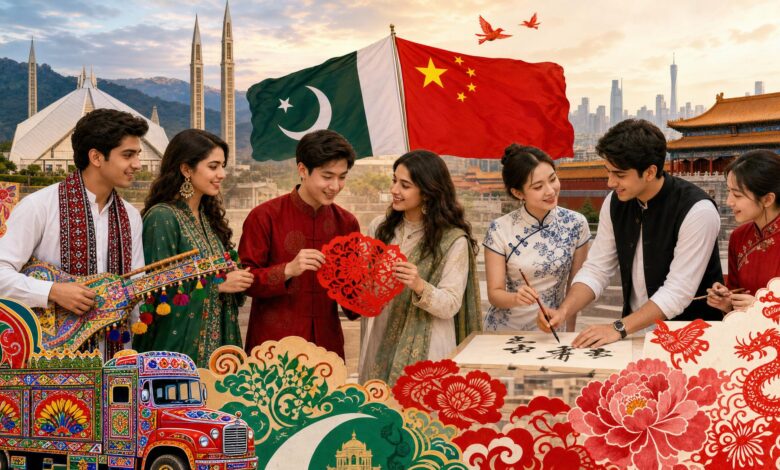
Recent anniversary events in Islamabad highlighted how cultural relations now sit alongside economic and diplomatic cooperation as a central pillar of the Pakistan-China partnership. At a grand ceremony marking 75 years of ties, Pakistan’s leadership reaffirmed close cooperation with China in areas including education, science and technology, agriculture and cultural exchanges. The commemorations also featured cultural performances by artists and children from both countries, a reminder that diplomacy is not only conducted through official statements but also through music, language, art and shared public memory.
The timing is significant. In January 2026, the seventh round of the China-Pakistan Foreign Ministers’ Strategic Dialogue in Beijing identified cultural and people-to-people exchanges as part of the broader bilateral agenda. Both sides announced commemorative activities for the 75th anniversary, framing the year as an opportunity to pass friendship “from generation to generation.” This language matters because it recognizes that long-term relations depend not only on governments and infrastructure projects, but also on whether younger citizens understand each other’s history, aspirations and social realities.
Education remains one of the most practical channels for this cultural connection. Chinese language learning has expanded in Pakistan through Confucius Institutes and university-linked programmes, while Pakistani students continue to pursue higher education opportunities in China. These exchanges create a generation that can move comfortably between both societies. Students who study language, medicine, engineering, business or technology abroad often return with more than degrees; they bring back personal friendships, new habits of collaboration and a deeper understanding of another civilization.
Cultural diplomacy is also becoming more digital. Young Pakistanis and Chinese citizens increasingly encounter each other through social media, short video platforms, online learning, gaming communities and digital entrepreneurship. This is reshaping the meaning of friendship between nations. Instead of being limited to embassy events or official delegations, cultural exchange is now visible in food videos, tourism reels, language tutorials, student vlogs and collaborative online projects. In that sense, the relationship is becoming more participatory and less formal — a healthy development for any long-standing partnership.
The China-Pakistan Economic Corridor has often dominated public discussion, but CPEC’s social impact is also cultural. Infrastructure connects places, yet it also connects stories. Gwadar, trade routes, universities, training centres and industrial cooperation all create new points of contact. When Pakistani workers, entrepreneurs, teachers and students interact with Chinese counterparts, cultural understanding becomes part of daily professional life rather than a ceremonial slogan.
Still, stronger cultural relations require care. Language barriers, stereotypes and limited public knowledge can create distance even between friendly countries. To deepen the relationship, both sides should invest more in translation, joint media projects, student exchange scholarships, museum collaborations, academic research, tourism promotion and youth festivals. Cultural exchange works best when it is two-way: Pakistani audiences should learn more about Chinese history and society, while Chinese audiences should see Pakistan beyond headlines — through its poetry, music, cuisine, hospitality, regional diversity and creative talent.
As Pakistan and China celebrate 75 years of diplomatic relations, the most important question is not only what governments will sign next, but what ordinary people will understand next. A resilient partnership needs roads, ports and trade, certainly. But it also needs classrooms, theatres, festivals, books, friendships and conversations. In 2026, the Pakistan-China relationship has an opportunity to present itself not just as a strategic alliance, but as a living cultural relationship shaped by the next generation.
Sources: The Nation report on the 75th anniversary commemorations; Ministry of Foreign Affairs Pakistan communiqué from the seventh round of the China-Pakistan Foreign Ministers’ Strategic Dialogue.