Pakistan-China Cultural Relations at 75: From Friendship to People-to-People Connection

Published May 28, 2026
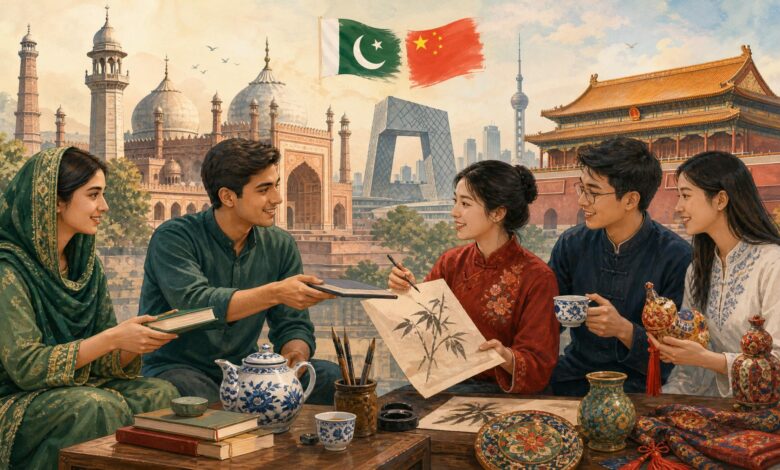
As Pakistan and China mark 75 years of diplomatic relations, the story of their partnership is increasingly being told not only through roads, ports and policy statements, but through classrooms, cultural festivals, media exchanges, scholarships and the daily connections between ordinary people. The phrase “all-weather friendship” has long defined the diplomatic vocabulary of the relationship, yet in 2026 its cultural dimension is becoming just as important as its strategic one.
Recent events surrounding the 75th anniversary have placed people-to-people ties at the centre of the conversation. Pakistan’s Minister for Planning, Development and Special Initiatives, Ahsan Iqbal, speaking at a cultural event in Islamabad, described the relationship as one built on mutual trust, in-depth cooperation and shared goals. His remarks underlined a wider reality: cultural relations are no longer treated as decorative additions to diplomacy. They are now seen as the social foundation that helps both countries sustain long-term cooperation across politics, trade, education and technology.
The latest high-level exchanges also reflect this deepening bond. During Prime Minister Shehbaz Sharif’s visit to Beijing this week, Chinese President Xi Jinping described Pakistan-China ties as an “unbreakable traditional friendship” rooted in mutual understanding, trust and support. While the meetings focused heavily on strategic and economic cooperation, the symbolism of the visit — including references to the 75-year journey — reinforced the idea that the partnership is also a shared historical and cultural narrative.
Education remains one of the strongest bridges between the two societies. Thousands of Pakistani students continue to study in Chinese universities, particularly in medicine, engineering, technology and business. These students do far more than earn degrees: they learn Mandarin, experience Chinese society firsthand, build friendships and return home with a practical understanding of China’s development model. At the same time, Chinese scholars, engineers, cultural workers and researchers working in Pakistan encounter the country’s languages, hospitality, food, literature and traditions. This two-way exposure creates a generation of informal ambassadors on both sides.
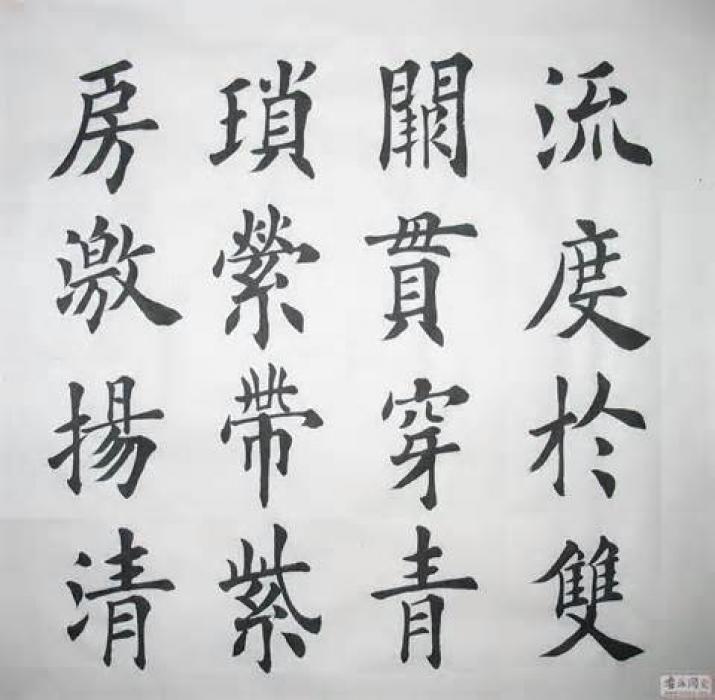
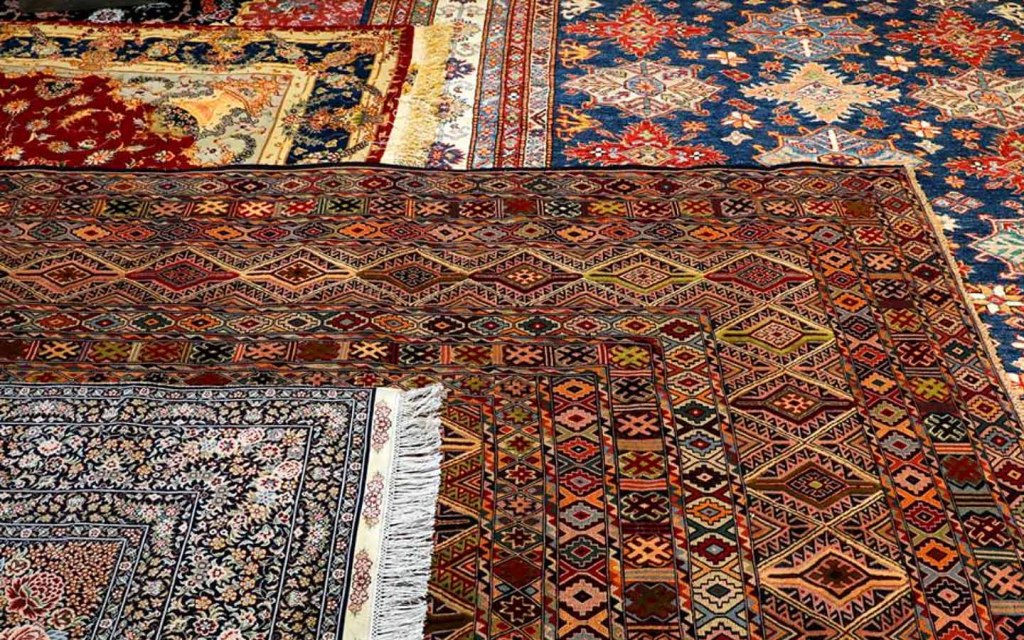
Cultural exchange is also visible in festivals, exhibitions and public diplomacy. Pakistani handicrafts, textiles, food and music have been showcased at events in China, including regional expos and cultural fairs, while Chinese art, calligraphy, language programmes and film screenings continue to attract audiences in Pakistan. These exchanges matter because they humanise a relationship that is often discussed only in strategic or economic terms. A student learning Urdu in Beijing, a Pakistani entrepreneur displaying craftwork in Kunming, or a Chinese teacher introducing Mandarin in Islamabad all contribute to a broader sense of familiarity.
The China-Pakistan Economic Corridor has also played an indirect cultural role. CPEC is usually discussed as an infrastructure and energy initiative, but its projects have brought thousands of workers, engineers, officials and local communities into closer contact. Such interaction is not always simple; differences in language, workplace culture and expectations can create challenges. Yet these very challenges make cultural understanding more necessary. Better communication, local engagement and mutual respect are essential if economic cooperation is to become socially sustainable.
Another important development is the shift toward digital and media cooperation. Young Pakistanis increasingly follow Chinese technology trends, e-commerce platforms, short-video culture and educational opportunities. Chinese audiences, meanwhile, are being introduced to Pakistan through documentaries, travel content, student stories and cultural programming. In an age where public opinion is shaped online, cultural diplomacy is no longer limited to embassies and official events. It now happens on screens, in classrooms and through creators who can make distant societies feel close.
The next phase of Pakistan-China cultural relations should focus on depth rather than ceremony. More joint university programmes, translation projects, youth exchanges, tourism facilitation, sister-city partnerships and creative industry collaborations could help both societies understand each other beyond slogans. Pakistan has a rich civilisational heritage, from Gandhara to Sufi traditions, while China offers one of the world’s oldest continuous cultures alongside a modern innovation-driven society. Bringing these strengths together can create a richer, more balanced relationship.
At 75, Pakistan-China relations are not standing still. They are moving from state-to-state confidence toward broader social connection. The real test of the “iron-clad friendship” in the decades ahead will be whether citizens, students, artists, entrepreneurs and communities feel as invested in the relationship as governments do. If the current momentum in education and cultural exchange continues, the friendship will not only remain strategic — it will become more human, more resilient and more meaningful.
Sources referenced: People’s Daily/Xinhua coverage of the 75th anniversary cultural event in Islamabad; CGTN commentary on China-Pakistan ties at 75; The Nation’s report on Prime Minister Shehbaz Sharif’s May 2026 Beijing visit.