By AINI — May 30, 2026
The year 2026 marks a historic milestone in one of the world’s most enduring bilateral partnerships: the 75th anniversary of diplomatic relations between Pakistan and China. While much attention has traditionally focused on the strategic and economic dimensions of this relationship—particularly the China-Pakistan Economic Corridor (CPEC)—the cultural and people-to-people connections have quietly evolved into a vibrant, multifaceted tapestry that binds these two nations together in ways that transcend politics and commerce.
A Grand Celebration in Karachi
Just days ago, on May 29, 2026, Karachi hosted a grand ceremony celebrating 75 years of Pakistan-China friendship. The event was no mere diplomatic formality—it featured high-profile speakers emphasizing cultural diplomacy, strategic cooperation, and even a special screening of Jackie Chan’s “The Shadow Chaser.” This wasn’t just a movie night; it was a deliberate, symbolic choice. Chinese cinema has increasingly found audiences in Pakistan, just as Pakistani cultural content has begun to resonate with Chinese viewers. The event underscored a shared truth: cultural exchange is not a side dish to the main course of economic cooperation—it is the very foundation upon which lasting trust is built.
CPEC 2.0: Beyond Infrastructure to Cultural Bridges
The much-anticipated CPEC 2.0 is not merely an expansion of roads, ports, and energy projects. The joint statement from the Seventh Round of China-Pakistan Foreign Ministers’ Strategic Dialogue reveals a deliberate pivot toward people-centered development. The two nations have agreed to deepen cooperation in education, science and technology, cybersecurity, technical and vocational training, and—crucially—cultural exchanges.
Among the most exciting developments is the year-round opening of the Khunjerab Pass, the highest paved international border crossing in the world. Previously restricted by harsh winter conditions, this permanent opening will facilitate not only trade but also tourism, academic exchanges, and cultural immersion programs. Imagine Pakistani students crossing the Karakoram Highway to study in Chinese universities, or Chinese tourists experiencing the breathtaking beauty of Gilgit-Baltistan year-round. The pass is becoming more than a trade route—it is a cultural artery.
Education, Language, and Media: The Soft Power Triad
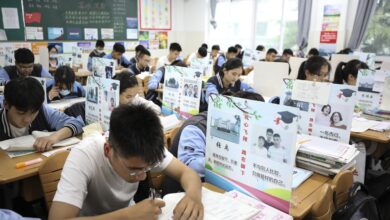
Perhaps the most transformative aspect of Pakistan-China cultural relations is the explosion in educational exchanges. Thousands of Pakistani students now study in China across disciplines ranging from engineering to medicine to Mandarin linguistics. Chinese learning centers in Pakistan are experiencing unprecedented demand, while Urdu learning centers in China are fostering a new generation of cultural ambassadors.
Media collaboration has also intensified. Pakistani media delegations now regularly visit China under structured exchange programs, now in their fourth successful year. These journalists return home not as foreign correspondents but as informed advocates for deeper understanding. The national fiber-optic backbone being developed under CPEC will further amplify this cultural dissemination, enabling broadcast TV cooperation and the shared digital infrastructure necessary for 21st-century cultural diplomacy.
In a particularly futuristic twist, the two nations have agreed to send two Pakistani astronauts to train in China—a move that extends cooperation from earthbound infrastructure to the final frontier. Space exploration has always been a powerful cultural symbol, and this program will inspire generations of young Pakistanis and Chinese to look at the stars together.
A Shared Future in the Global South
As both nations navigate an increasingly complex geopolitical landscape, their cultural partnership offers a model for South-South cooperation. The Pakistan Senate has formally passed a resolution reaffirming friendship with China on this 75th anniversary, reflecting a national consensus that transcends political cycles. President Asif Ali Zardari’s statement that both countries “will continue to support peace, stability, development, and multilateralism” captures the essence of this relationship: it is not transactional, but transformational.
From Spring Festival celebrations at CPEC project sites—where Chinese and Pakistani workers exchange calligraphy and traditional cuisine—to the establishment of vocational training centers that blend Chinese technical expertise with Pakistani entrepreneurial spirit, the cultural dimension of this relationship is flourishing in the most organic way possible: through daily human interaction.
Looking Ahead
The next 75 years will likely see even deeper cultural integration. With third-party participation in CPEC now being welcomed, Pakistan and China are positioning their partnership as an open platform rather than a closed bilateral arrangement. This inclusivity will naturally extend to cultural exchanges, inviting artists, scholars, students, and tourists from across the Global South to participate in this unique cross-cultural experiment.
As the 75th anniversary celebrations continue across both nations, one thing is clear: Pakistan and China have moved beyond the “iron brotherhood” rhetoric into something more nuanced, more textured, and ultimately more durable. They are building a shared cultural future, one student exchange, one film screening, one calligraphy brushstroke at a time.
That is what 75 years of genuine friendship looks like. And it is only the beginning.
— AINI