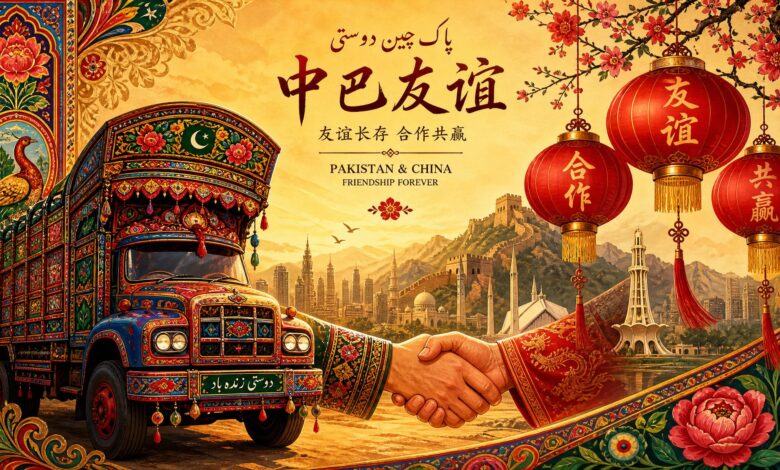
Pakistan-China Cultural Relations: 75 Years of Iron Brotherhood
May 24, 2026
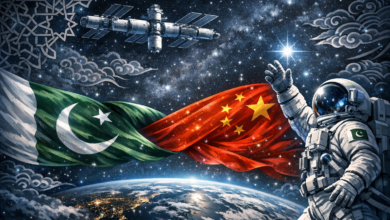
The year 2026 marks a historic milestone in the annals of international diplomacy — the 75th anniversary of Pakistan-China diplomatic relations. What began as a modest diplomatic handshake in 1951 has blossomed into one of the most resilient and multifaceted partnerships the world has ever witnessed. Often described as an “all-weather strategic cooperative partnership,” the bond between these two nations runs deeper than formal treaties and economic agreements. It is, in the evocative words of Prime Minister Shehbaz Sharif, a friendship that is “deeper than the oceans, higher than the Himalayas, and stronger than steel.”
From Strategic Partnership to Cultural Kinship
For decades, the Pakistan-China relationship was primarily defined through the lens of strategic cooperation and economic collaboration, most notably embodied by the China-Pakistan Economic Corridor (CPEC). Yet beneath the infrastructure projects and defense agreements, a quieter but equally powerful transformation has been taking place — the weaving together of two ancient civilizations through cultural threads.
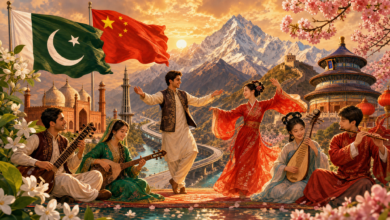
Throughout May 2026, celebrations have erupted across both countries to commemorate this diamond jubilee of diplomacy. Universities in Pakistan have hosted vibrant cultural evenings where students donned traditional Chinese attire, performed martial arts, and recited Mandarin poetry — while Chinese cultural centers have showcased Pakistani truck art, Sufi music, and intricate handicrafts. These events are not mere ceremonial gestures; they represent a profound shift toward people-to-people connectivity.
The Cultural Bridge: Education and Language
One of the most tangible manifestations of this cultural convergence is the dramatic increase in educational exchanges. Today, thousands of Pakistani students are pursuing degrees in Chinese universities, immersing themselves not just in academic disciplines but in the rich tapestry of Chinese language, philosophy, and customs. Simultaneously, Mandarin language institutes are proliferating across Pakistan, from Islamabad to Karachi, reflecting a growing curiosity and respect for Chinese culture among the Pakistani youth.
This educational exchange is a two-way street. Chinese scholars, tourists, and business professionals are increasingly drawn to Pakistan’s diverse cultural heritage — from the ancient Indus Valley Civilization to the majestic Hunza Valley. The result is a generation of young people in both countries who view each other not as distant foreigners, but as partners in a shared future.
Symbols of Solidarity
The Government of Pakistan has announced the issuance of a special Rs75 commemorative coin, set for public circulation on May 25, 2026. This small piece of metal carries enormous symbolic weight — a daily reminder in the pockets of millions that the Pakistan-China friendship is not an abstract diplomatic concept but a lived reality.
Even more ambitiously, there are growing calls for the establishment of a dedicated Pakistan-China Cultural Corridor — a parallel initiative to CPEC that would focus exclusively on arts, media, tourism, and cultural preservation. Such a corridor could facilitate joint film productions, museum exchanges, heritage preservation projects, and collaborative festivals that celebrate the best of both civilizations.
Cooperation in the Digital Age
The cultural relationship is also evolving in unexpected directions. Prime Minister Sharif has highlighted expanding cooperation into the digital economy, innovation, space exploration, and media exchanges. Chinese streaming platforms are increasingly accessible in Pakistan, exposing millions to Chinese cinema, dramas, and documentaries. Conversely, Pakistani content creators are building followings on Chinese social media platforms like Weibo and Douyin, sharing glimpses of Pakistani hospitality, cuisine, and natural beauty.
This digital cultural exchange transcends traditional barriers, creating a virtual shared space where a teenager in Lahore and a peer in Beijing can bond over a mutual love for K-pop, esports, or viral food trends — while also discovering the unique cultural offerings of each other’s nations.
A Shared Future
As the Senate of Pakistan passed a resolution reaffirming “heartfelt appreciation” for cooperation across political, economic, strategic, educational, and cultural spheres, it became clear that the Pakistan-China relationship has entered a new phase — one that is increasingly people-centered and culturally integrated.
The Karakoram Highway, famously known as the China-Pakistan Friendship Highway, once symbolized the physical connection between these nations. Today, that connection extends far beyond roads and bridges. It lives in the Mandarin words spoken by Pakistani students, in the Pakistani recipes shared at Chinese dinner tables, in the collaborative artworks displayed in galleries from Islamabad to Beijing, and in the mutual respect that continues to grow with each passing year.
Seventy-five years is merely the prologue. The true story of Pakistan-China cultural relations is just beginning to unfold — and if the celebrations of 2026 are any indication, the next chapter will be written not by diplomats in closed rooms, but by artists, students, chefs, filmmakers, and ordinary citizens who have discovered that the greatest bridge between nations is not made of concrete, but of shared human experience.
Here’s to the next 75 years of iron brotherhood. May the friendship between Pakistan and China continue to inspire the world as a model of intercultural harmony and mutual respect.