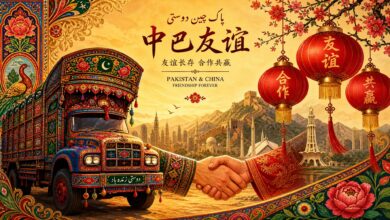
Pakistan-China Relations at 75: A Cultural and Strategic Partnership Forged in Friendship

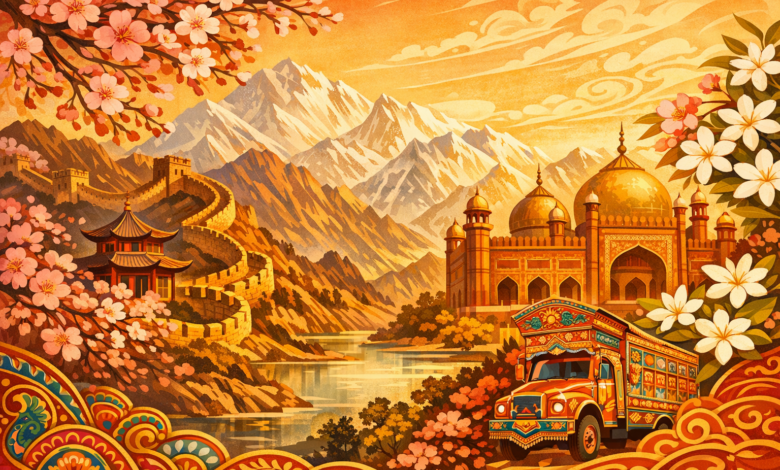
As the world watches shifting geopolitical alliances with cautious eyes, one partnership remains remarkably steadfast. In 2026, Pakistan and China mark the **75th anniversary of their diplomatic relations** — a milestone that speaks not merely to political convenience, but to a genuine, all-weather friendship that has weathered decades of regional and global upheaval.
A Presidential Visit at a Pivotal Moment
President Asif Ali Zardari’s week-long visit to China in late April 2026 was far from ceremonial. Arriving on April 25 and staying through April 30, Zardari engaged in what analysts have described as a highly calibrated strategic dialogue designed to transition the Pakistan-China partnership into its next evolution. The timing was particularly significant — coming on the heels of Pakistan’s successful mediation efforts between the United States and Iran, a role that Beijing publicly endorsed and supported.
This diplomatic credibility lent substantial weight to Zardari’s extended stay, transforming what could have been routine anniversary celebrations into substantive negotiations about the future of bilateral cooperation.
From CPEC 1.0 to CPEC 2.0: A New Chapter
The China-Pakistan Economic Corridor (CPEC), long the cornerstone of bilateral ties, is itself entering a transformative phase. Where CPEC’s first phase delivered impressive infrastructure — 20 gigawatts of energy capacity, 800 kilometers of highways, landmark projects like the PKM Motorway and Islamabad International Airport — **CPEC 2.0** represents a deliberate pivot toward socio-economic transformation.
The second phase emphasizes **industrialization, agricultural modernization, and digital connectivity** through the establishment of Special Economic Zones (SEZs). Reports indicate that approved SEZs have expanded from seven to forty-four, with Chinese firms committing approximately $2 billion in new investments. This is not merely about building roads and power plants anymore; it is about building sustainable economic ecosystems.
Cultural Diplomacy: The Heart of the Matter
Yet what distinguishes the Pakistan-China relationship from typical state-level cooperation is its remarkable cultural dimension. On May 8, 2026, dignitaries gathered at the UNI International-China Pakistan Deep Love Cultural Exploration Center in Islamabad for a ceremony that genuinely captured the spirit of this partnership.
Former Prime Minister Raja Pervaiz Ashraf, attending as Chief Guest, shared moving diplomatic stories that traced the evolution of this friendship through decades. He recalled moments of mutual support and solidarity that transcended transactional diplomacy — moments that revealed two nations genuinely invested in each other’s wellbeing. His appeal to the younger generation to carry forward this legacy of trust resonated precisely because the relationship has consistently demonstrated that it deserves such trust.
Beyond Infrastructure: Agriculture, Technology, and Maritime Security
Zardari’s visit explored concrete cooperation in sectors that directly impact ordinary citizens. **Agricultural modernization** promises to enhance Pakistan’s food security while creating export opportunities. **Manufacturing partnerships** and **tea cultivation initiatives** represent economic diversification that could generate employment across multiple provinces. Even **maritime security cooperation** speaks to shared strategic interests in keeping regional sea lanes open and secure.
The participation of CSCEC Pakistan and other Chinese construction firms in anniversary celebrations served as a tangible reminder that this partnership produces actual results — airports, motorways, commercial centers — that Pakistanis use every day.
Looking Forward
As Islamabad and Beijing commemorate seventy-five years, they are not merely celebrating history. They are positioning their partnership for the next quarter-century. In an era where alliances often fracture under pressure, Pakistan and China have demonstrated something increasingly rare: a relationship built on consistent mutual interest, genuine cultural appreciation, and strategic patience.
For observers tracking South Asian geopolitics, this anniversary is worth watching closely. CPEC 2.0, if implemented with the same determination that characterized its first phase, could fundamentally reshape Pakistan’s economic trajectory. And for a region often characterized by instability, the Pakistan-China partnership offers a model of what sustained, good-faith cooperation can actually achieve.
*Published on May 11, 2026*