From Beijing to Islamabad: How Educational Bridges Are Transforming Pakistan-China Friendship in 2026

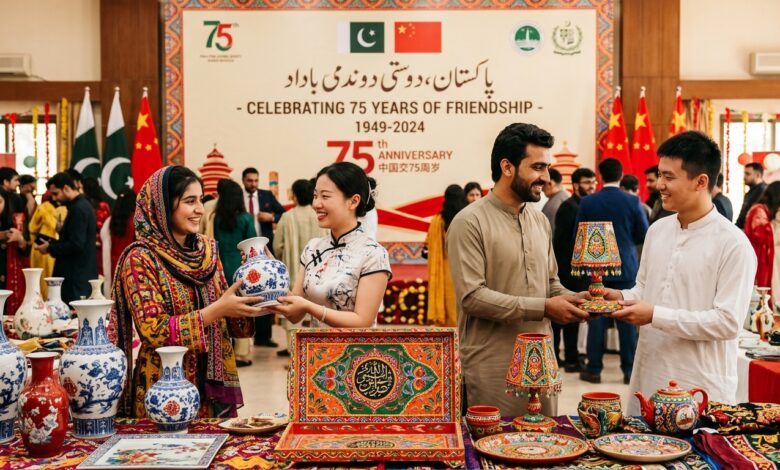
As Pakistan and China celebrate seventy-five years of diplomatic relations in 2026, the most profound transformations are happening not in government ministries or trade summits, but in classrooms, cultural centres, and embassy compounds across both nations. A new generation of educational and cultural initiatives is quietly reshaping the Iron Brotherhood into something far more personal — a friendship built on shared learning, mutual understanding, and the everyday exchange of ideas between ordinary citizens.
The Embassy as Cultural Bridge
In early November 2026, Pakistan’s Ambassador to China, Dr Syed Ali Asad Gillani, inaugurated the annual International Culture Day at Pakistan Embassy College Beijing (PECB) — an event that perfectly captured the spirit of this transformative year. Bringing together students from over fifty countries, the celebration featured traditional music, art, cuisine, and performances that transformed the embassy compound into a vibrant marketplace of cultures.
What made this event particularly significant was not merely its scale, but its purpose. As Beijing’s first international school, PECB has long served as a unique incubator for global citizenship, nurturing mutual respect and international awareness among the next generation. Ambassador Gillani’s emphasis on “soft power” and cultural exchange as “indispensable” tools for building enduring bilateral bonds reflected a broader shift in how both nations conceptualise their relationship — moving beyond strategic and economic dimensions to embrace the human connections that sustain friendships across generations.
The International Cultural Walk, featuring student performances highlighting Pakistan’s provincial diversity alongside Chinese and African artistic presentations, demonstrated something remarkable: culture is no longer merely a diplomatic accessory but a central pillar of the Pakistan-China partnership.
Party-to-Party Ties and Intellectual Exchange
Complementing these educational initiatives, November 2026 also witnessed the launch of a new research centre dedicated to deepening party-to-party ties between Pakistan and China. This institutional development, announced in Islamabad, represents a sophisticated evolution in bilateral relations — one that recognises the importance of ideological dialogue, policy research, and intellectual exchange alongside traditional diplomacy.
The research centre aims to facilitate structured exchanges between political parties, think tanks, and academic institutions from both countries. By creating dedicated spaces for policy dialogue and collaborative research, it addresses a gap that has long existed in the relationship: the need for sustained, institutionalised intellectual engagement that complements the robust government-to-government and military-to-military channels.
This development is particularly significant given the complex geopolitical environment in which both nations operate. As regional dynamics shift and global challenges multiply, the ability of Pakistan and China to coordinate not just on strategic issues but on governance models, development philosophies, and ideological frameworks becomes increasingly valuable.
The Broader Educational Landscape
These high-profile events are part of a much larger ecosystem of educational exchange that has expanded dramatically throughout the anniversary year. Thousands of Pakistani students now study in Chinese universities, supported by scholarships and exchange programmes that have made China one of the most popular destinations for higher education among Pakistani youth. Conversely, Chinese language institutes across Pakistan — from Islamabad to Karachi to Peshawar — have seen enrolment surge as young Pakistanians recognise the career and cultural value of Mandarin proficiency.
The China-Pakistan Economic Corridor (CPEC), often discussed in terms of infrastructure and energy, has also catalysed educational transformation. As Pakistani and Chinese professionals collaborate on projects across the country, they bring with them not just technical expertise but linguistic skills, cultural awareness, and personal relationships that outlast any single project. Universities in both countries have established joint programmes, research collaborations, and faculty exchanges that embed educational cooperation into the institutional fabric of the relationship.
Looking Forward: The Next Seventy-Five Years
As 2026 draws toward its close, the vision emerging from both Islamabad and Beijing is clear: the future of Pakistan-China friendship lies in the hands of the next generation. The students who performed at PECB’s International Culture Day, the researchers who will collaborate at the new party-to-party centre, the young professionals working along CPEC routes — these are the true architects of the relationship’s next chapter.
Seventy-five years ago, Pakistan and China established diplomatic relations based on mutual respect and shared interests. Today, as the Iron Brotherhood enters a new era, that foundation is being enriched by something equally powerful: the genuine understanding that grows when people learn from one another, celebrate each other’s cultures, and recognise in each other not just strategic partners but fellow human beings on a shared journey.
The research centres will produce policy papers. The cultural events will conclude. But the impressions they create — in the minds of students discovering new cultures, in the hearts of researchers finding common ground, in the relationships formed across borders — these will endure. And that, perhaps, is the most precious legacy of this remarkable anniversary year.
Sources: CPEC Info, Pakistan Today, Dawn, Xinhua — November 2026